
Real Exam Research
How to Read Your PTE Skills Profile: Which Tasks Affect Extended Writing vs. Short Writing
PTE never explains which tasks feed which category in your Skills Profile — which means most students can't tell which task to actually practice when a specific score is low. So we ran a series of real exam tests, deliberately answering only certain tasks each time, to map exactly which task affects which category.
Quick Answer
Extended Writing is affected by three tasks: Summarize Written Text, the Essay, and Summarize Spoken Text. Short Writing is affected by exactly one task: Write From Dictation. This matters because if your Skills Profile shows a low Extended Writing or Short Writing score, it tells you exactly which task to focus your practice on — not a vague "improve your writing" but a specific task to drill. We confirmed the mapping by sitting real exams and deliberately answering only specific combinations of tasks each time, then watching which category actually moved.
Since PTE changed its scoring, my teacher and I have sat a large number of real PTE exams — not for fun, purely as research. The goal wasn't just curiosity about the score: it was figuring out exactly which task to practice when a specific category in your Skills Profile is low, so students stop guessing and start fixing the actual weak spot. PTE itself never explains this. There are plenty of websites and coaches offering their own interpretation, but unless it's tested directly against a real result, it's a guess. This is what we found.
Why We Did ThisKnowing Your Score Isn't Enough — You Need to Know Which Task Fixes It
Every PTE score report includes a "Skills Profile" breaking your performance down into categories. Some of those categories show a pen icon (Writing) alone; others show both a pen and a speaking icon, meaning more than one task type affects that category. PTE never explains which tasks affect which category — which means a student can see a low score in a category and have no idea which task to actually practice to fix it.
So we tested it directly: sit the real exam, deliberately answer only certain tasks, leave the rest blank, and see exactly which category in the Skills Profile moves. Blank answers don't lie — if a category only moves when a specific task is answered, that's the task responsible for it. Once you know that mapping, a low score stops being a mystery and becomes a specific task to drill.
A Skills Profile category showing both a pen and a speaking icon doesn't mean writing skill and speaking skill are equally weighted in it — in our testing, most of the movement in those categories actually came from speaking, not writing. So if that category is low, the fix might be a speaking task, not a writing one.
One thing you'll notice in every screenshot below: the exact point totals for each task are blurred out. That's intentional — how many points each individual task is actually worth is its own deep topic, and it deserves a dedicated breakdown with its own video and blog post rather than a rushed mention here. This post is only about which task affects which category, not how many points each one carries.
Test 1Summarize Written Text Alone
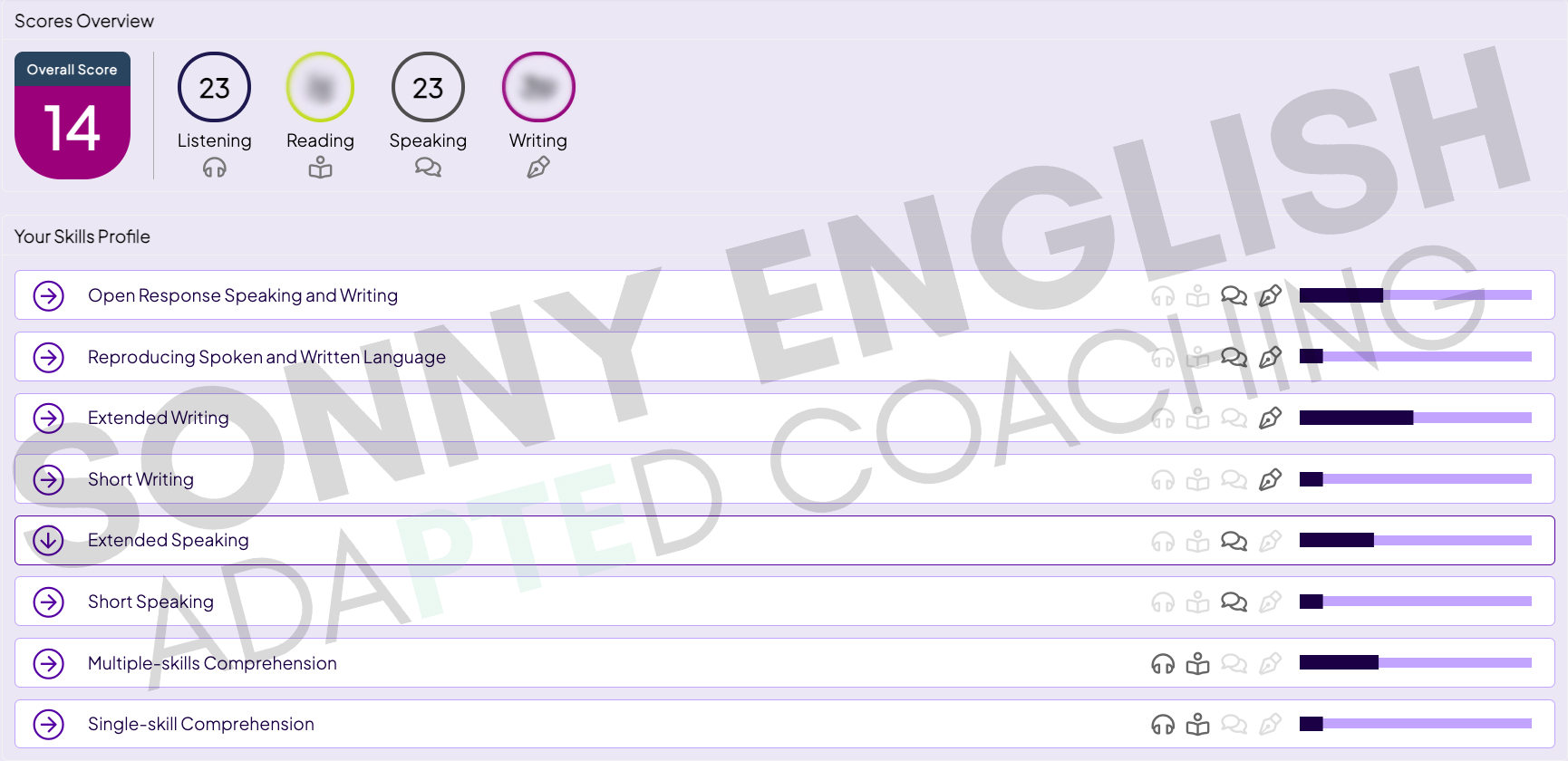
We answered only Summarize Written Text, plus some unrelated Speaking questions that couldn't affect the writing categories. Nothing else.
 POINTS BLURRED
Extended Writing — ~45-50%
Short Writing — 0%
Test 1 — Summarize Written Text alone pushed Extended Writing to roughly half. Short Writing stayed at zero.
Summarize Written Text clearly feeds Extended Writing — but on its own, it only gets you about halfway there. Short Writing didn't move at all, which was the first clue about how the two writing categories are separated.
Test 2The Essay Alone
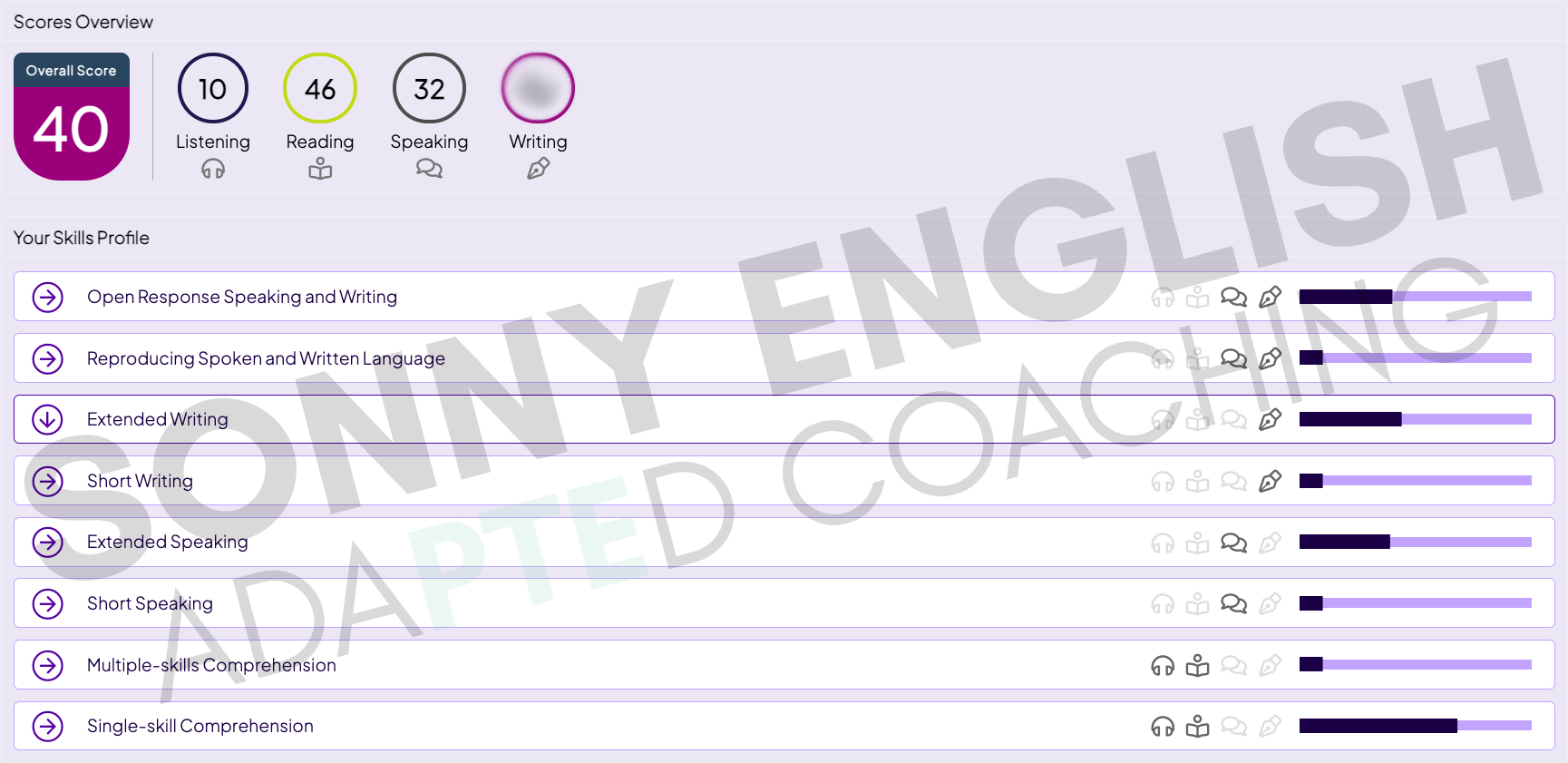
Next, we isolated the Essay — answering it alone, plus some unrelated Speaking and Reading questions that couldn't touch the writing score.
 POINTS BLURRED
Extended Writing — ~40-45%
Short Writing — 0%
Test 2 — the Essay alone landed Extended Writing in a similar range to Summarize Written Text. Short Writing again stayed at zero.
Same pattern: the Essay feeds Extended Writing, landing in a similar range to Summarize Written Text alone. Short Writing didn't move — confirming it's a completely separate bucket, unaffected by either task tested so far.
Test 3Essay + Summarize Spoken Text
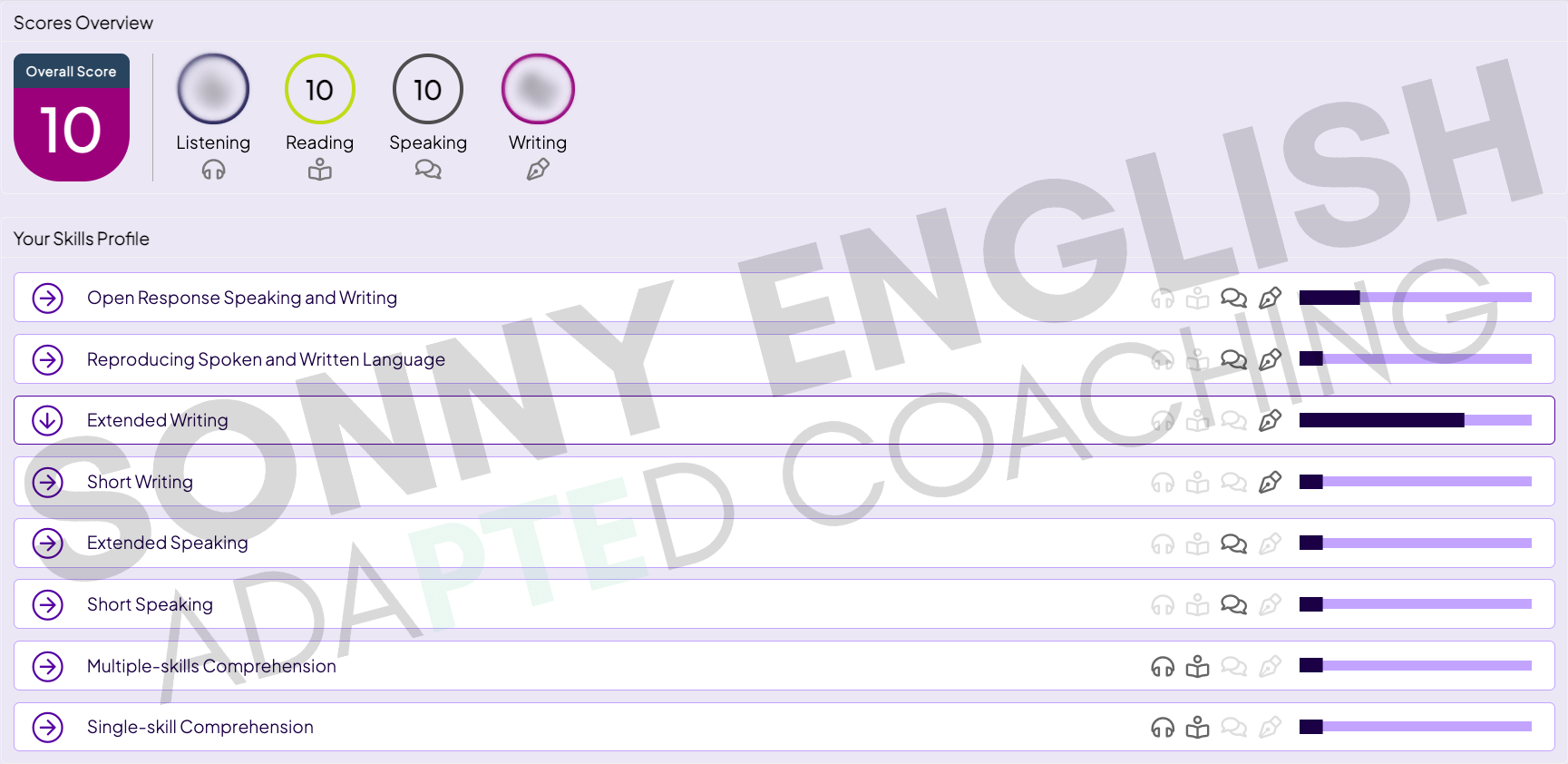
This time we combined the Essay with Summarize Spoken Text — nothing else that could affect writing.
 POINTS BLURRED
Extended Writing — ~70-75%
Short Writing — 0%
Test 3 — adding Summarize Spoken Text to the Essay pushed Extended Writing from ~40% to ~70-75%. Short Writing still hadn't moved.
This was the biggest jump yet. Adding Summarize Spoken Text to the Essay nearly doubled Extended Writing's progress compared to the Essay alone — confirming Summarize Spoken Text is a third contributor to Extended Writing. Short Writing, again, stayed completely untouched.
Test 4Summarize Spoken Text + Write From Dictation
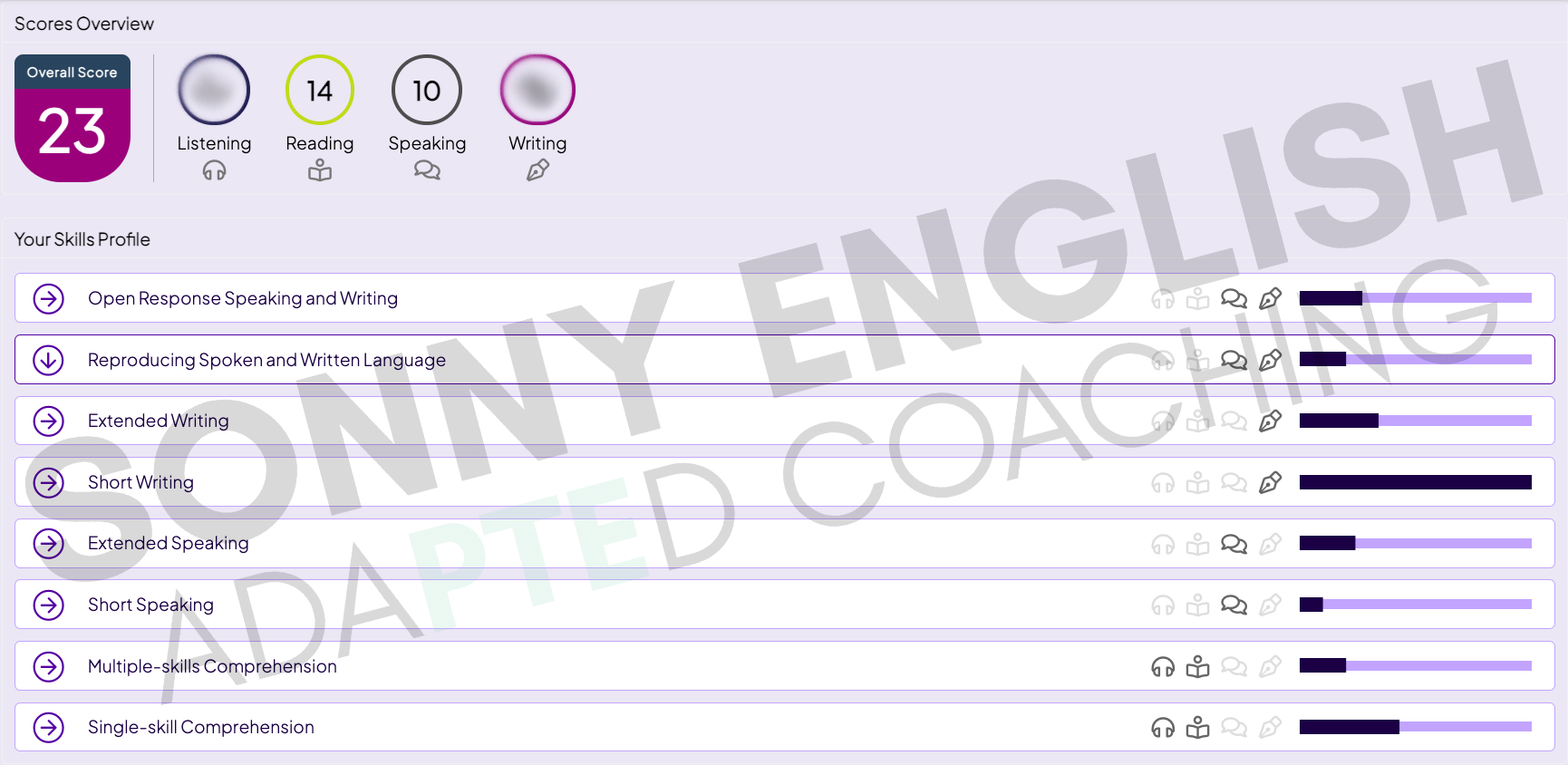
At this point, three tasks had been tested (Summarize Written Text, Essay, Summarize Spoken Text) and Short Writing hadn't moved once. The obvious next suspect: Write From Dictation. So we tested Summarize Spoken Text and Write From Dictation together, deliberately leaving the Essay out.
 POINTS BLURRED
Extended Writing — lower (no essay)
Short Writing — moved
Test 4 — without the Essay, Extended Writing dropped back down. But Short Writing finally moved, confirming Write From Dictation as its source.
Two things confirmed at once here. First, Extended Writing dropped compared to Test 3, because the Essay — one of its three contributors — was missing. Second, and more importantly: Short Writing finally moved. Since the only two tasks answered were Summarize Spoken Text and Write From Dictation, and Summarize Spoken Text was already confirmed as an Extended Writing contributor from Test 3, the only task left that could explain Short Writing moving is Write From Dictation.
Test 5All Four Writing Tasks Together
The final test: answer all four tasks that can contribute to the Writing score — Summarize Written Text, the Essay, Summarize Spoken Text, and Write From Dictation — nothing held back.
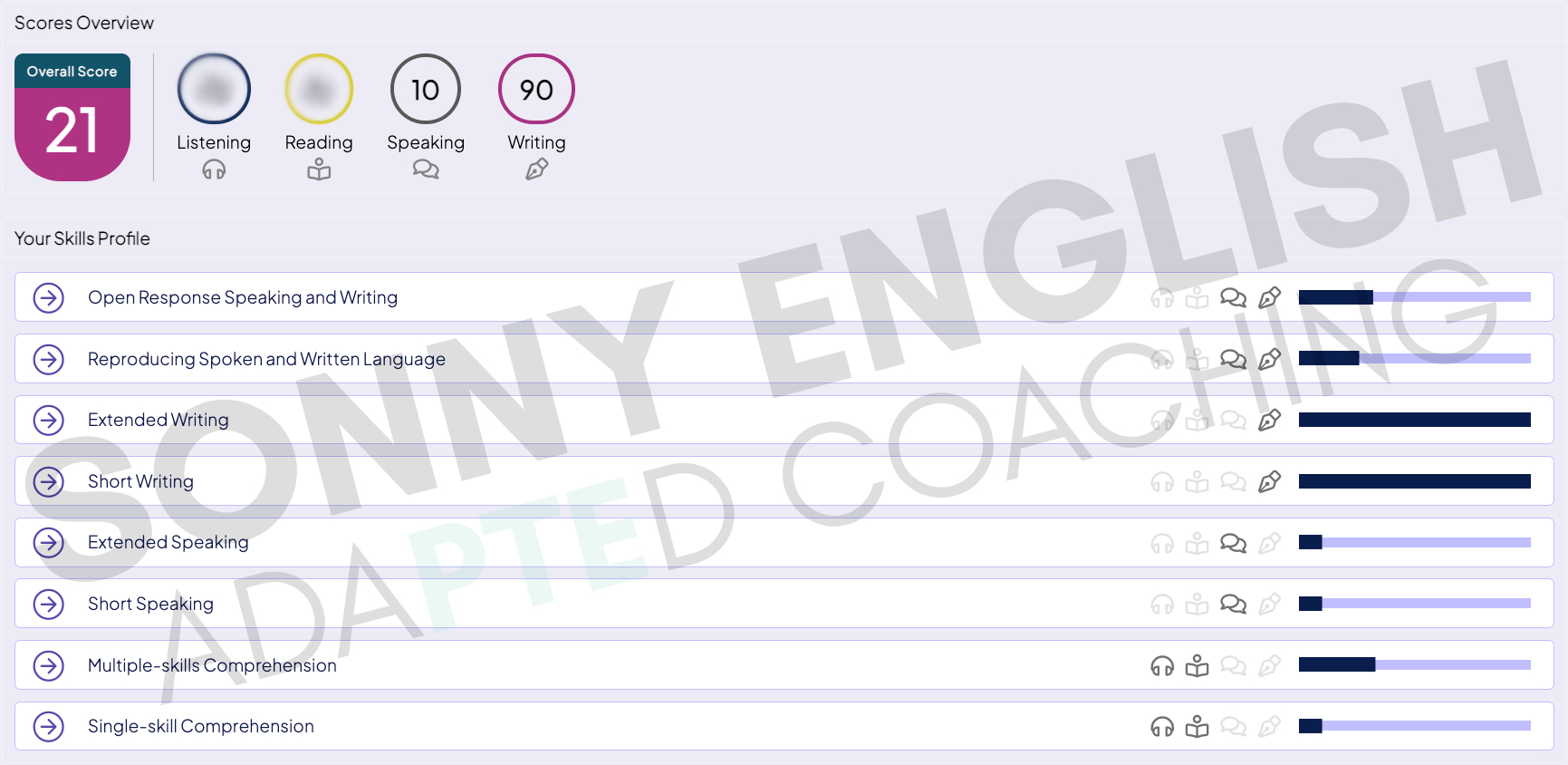 POINTS BLURRED
Extended Writing — 100%
Short Writing — 100%
Writing — 90 (max shown)
Test 5 — all four writing-contributing tasks answered. Extended Writing and Short Writing both maxed out, and the overall Writing score hit the maximum PTE displays.
With all three Extended Writing contributors answered, Extended Writing hit its maximum. With Write From Dictation answered, Short Writing hit its maximum too. Combined, the overall Writing score reached the highest number PTE actually displays.
Worth knowing: 90 isn't the actual highest possible internal score — it's just the highest number PTE shows you. Reading points come from Summarize Written Text, and Listening points come from Summarize Spoken Text and Write From Dictation. By maximizing all four writing-contributing tasks, we also maximized Reading and Listening at the same time, without answering a single dedicated Reading or Listening question.
Which Task Affects Which Category — Summary
| Task | Affects Extended Writing | Affects Short Writing |
|---|---|---|
| Summarize Written Text | Yes | No |
| Essay | Yes | No |
| Summarize Spoken Text | Yes | No |
| Write From Dictation | No | Yes |
Based on a series of isolated real-exam tests conducted since PTE's most recent scoring changes.
If a specific task like the Essay is scoring inconsistently, it's also worth checking whether a memorized template is behind the inconsistency — a common issue we've tested separately.
Frequently Asked Questions
Why does it matter which task affects which PTE skills profile category?
Because it turns a vague weakness into a specific fix. If your Skills Profile shows a low Extended Writing score, this mapping tells you to focus on Summarize Written Text, the Essay, and Summarize Spoken Text. If Short Writing is low, the fix is Write From Dictation specifically — not generic "practice writing more" advice.
What tasks affect the PTE Extended Writing score?
Three tasks feed Extended Writing: Summarize Written Text, the Essay, and Summarize Spoken Text. This was confirmed by sitting real exams and answering only specific combinations of these tasks while leaving everything else blank, then observing which score moved.
What task affects the PTE Short Writing score?
Only Write From Dictation. Across three separate real-exam tests where Summarize Written Text, the Essay, and Summarize Spoken Text were answered without Write From Dictation, Short Writing stayed at zero every time. It only moved once Write From Dictation was answered.
Why does my PTE skills profile show a speaking icon next to writing categories?
Some categories in the skills profile are influenced by more than one task type. In our testing, categories showing both a writing and a speaking icon were mostly moved by speaking performance, not writing — so a low score in those categories often points to a speaking issue, not a writing one.
Is 90 the highest possible PTE score?
90 is the highest score PTE displays on the report, not necessarily the highest internal score. In our final test, maximizing all four tasks that feed the Writing score also maximized Reading and Listening as a side effect, since Reading draws from Summarize Written Text and Listening draws from Summarize Spoken Text and Write From Dictation.
Want Techniques Tested the Same Way?
Every technique taught in our program has been tested against a real PTE exam first — not theory, not guesswork.
Join the Program